17 January 2013

Business As Usual: An Insider's Look at Publishing


I think publishing has changed in ways that we haven’t begun to come to grips with. The changing landscape of the media-intensive culture we live in necessitates that we become content providers in ways we didn’t need to worry about even five years ago. While that’s exciting, on the one hand, on the other I find it, frankly, daunting.

So here is Aunt Noony’s down-and-dirty look at publishing, from my perspective. The biggest change I’ve seen is the eclipse of New York traditional publishing by the digital-first providers, which then turned so-called “traditional” publishers into digital-first by necessity. But what does all that bla-bla mean?

I’m going to pretend for a moment that my reader is a reader, and not an author, just so we can all get on the same page. To writers of my acquaintance, and at writing conferences, the term “New York,” “traditional publishing,” and even, sometimes, “real publishing” is used to mean the big houses, or “the Big Five”: Hachette Book Group, HarperCollins, Penguin, Random House, and Simon & Schuster. Technically, as of November, 2012, it’s the big four, since Penguin and Random House merged.

Digital-first is a term used to refer to houses that publish books in digital form first, and was coined as a way to step away from the idea that publishers that started out as e-publishers were simply “small presses.” Small press is a publishing house that releases a limited number of titles in a year, usually to specific market segments. Before the advent of digital publishing, authors really only had two possible markets: try to get into one of the big houses, or choose a small press and potentially smaller sales. (It’s worth noting that not all small presses mean smaller sales and not all “big five” contracts translate to big money.)

In 2010, Amazon announced that ebooks sold more than hardcovers, which shocked many people in the industry and observing it. (WSJ and NYT stories.)  Would that spell the end of traditional (i.e. paper) publishing? Speculation ran high as to when paper would end, how it would end, and how large a piece of the pie ebooks would consume. Fast forward to January 2013 and ebooks are an established part of the marketplace and a large portion of the reading public doesn’t know what they did before their e-reader. That’s not to say books in paper form are gone, but the trend is clear: ebook sales are growing, paper sales are flat or declining across all sectors, and New York houses have paid attention. The Big Five have started putting real money behind their ebook initiatives and digital-first publishing has hit the mainstream.

I could speculate as to what I think will happen in the next two years, but I don’t think that adds to the discussion. What will be, will be. My job, as an author and content provider, is to write the content, not worry about the channel. I need to understand the channel, but I don’t need to worry about it. The changes in the channel don’t change the fundamental nature of what I do as a writer: I still craft stories. How they get from my mind to the reader’s mind is not as important as that they get written first.

At the risk of sounding like I’m contracting myself, I do think it’s incumbent on us as authors to pay attention to the changes in the marketplace and to understand the channel. As interested readers, we can follow it as well, if for nothing else than to be witness to the greatest shift in media consumption since the printing press. So here’s what I’m going to do instead of make predictions. I’m going to show you a window into the predictions of the “big boys.”

While any publicly-traded company that trades on an exchange in the United States is required to disclose a ton of information on a regular basis, I found that none of the Big Five are publicly traded (though a couple parent companies of the publishers are). If the company is private it’s a little harder to get information on their official opinions, but you can always start by visiting their website and digging around.

Yahoo Finance and Morningstar have a wealth of information available, as does Bloomberg Online. Using the Big Five as an illustration:

  1. Hachette Book Group is now a private company. more>>
  2. HarperCollins is now part of Rupert Murdoch’s NewsCorp. more>>
  3. Penguin and Random House merged in November, 2012, creating the largest publisher of consumer books. The merger still has to be approved because of ongoing litigation against Penguin for price-fixing of ebooks. more>>
  4. Simon & Schuster is a part of CBS. more>>
Barnes and Noble and Amazon are publicly traded, however, and their quarterly reports to Wall Street and investors are archived on Morningstar. I recommend you check them out.

  1. Amazon.com; Ticker Symbol AMZN; Q3 2012 Earnings Call Transcript
    (Q4 comes out the end of January, 2013; keep your eyes peeled for the transcript)
  2. Barnes & Noble, Inc.; Ticker Symbol BKS; Q2 2013 Earnings Call Transcript

I suppose, in closing, I will leave you with the thought that as authors, we must understand that we are, also, in the publishing business. The better we can understand that business, the better – more effective – we can participate.

What questions do you have about the publishing industry in general or any of the specifics I’ve included above? Don’t be shy. It’s a complex subject, but we can figure it out together.

Write on!

--
“It takes courage to grow up and become who you really are.”
- E.E. Cummings

My links: Blog | Website | Facebook | Twitter | Goodreads | Amazon | LinkedIn | Pandora
Knoontime Knitting: Blog | Facebook | Twitter | Ravelry
Noon and Wilder links: Blog | Website | Facebook
The Writer Zen Garden: The Writers Retreat Blog | Forum | Facebook | Twitter
Team Blogs: Nightlight | Nightlight FB Page | Beyond the Veil | BtV FB Page | LGBT Fantasy Fans and Writers | LGBTFFW FB Page
Publishers: Samhain Publishing | Torquere Press

Check out BURNING BRIGHT, available from Samhain Publishing.
Check out EMERALD FIRE, available from Torquere Books.
Check out "Taking a Chance", part of the Charity Sips 2012 to benefit NOH8, available from Torquere Books.
Watch for COOK LIKE A WRITER, coming February 2013 from the Guerrilla Chicks.
Watch for TIGER TIGER, coming July, 2013, from Samhain Publishing.


14 January 2013

What's In A Name? Everything if it's Remembered...


Greetings Kittens,

Remember me? It’s been a long time, even longer in publishing terms. It used to be that an author who could crank out a book a year, was considered prolific. With the advent of digital publishing and the flourishing of novellas,  a book a year just doesn’t cut if you’re not a big name on the national bestseller list. And let’s be honest, even most of them have come up to the two book minimum.

Why a two book minimum? In publishing, and business in general, this is referred to as staying “front of mind” with your audience. When a reader thinks of getting a new book, whose name comes to mind first? Who have they just heard about recently? Who lingers at the front of their mind? In many circles, a book every six months, be they stand alone or alternating series, is considered basic to accomplishing continued name recognition.

2012 was a rough year for me medically and emotionally. I all but disappeared as an online presence and I didn’t write a single new word of original fiction for the entire year. Things drew to such a halt, that a book I’ve been trying to get published for years finally had its shot, and I was too ill to move it forward, leaving the contract on indefinite hold. That left me with just one published story for the year...that quite fortunately turned into two publication dates and kept me from disappearing altogether.

LOVE NOTES, a four author Valentine’s Day anthology by Musa Publishing, came out on January 27, 2012. It reviewed well, but didn’t sell to expectation. As a result, my contribution ITS SWEETEST FORM, came out as an individual ebook on September 11th, 2012. That’s a little longer than the ideal new publication every six months, but it was enough.

Due to the embassy attacks, I didn’t do promotion the day of release. Almost immediately afterward, I fell sick again, everything changed at the day job, and all sorts of life rained down upon me. I didn’t get back online the way I’d hoped, and for the second time, the story was left to stand on its own. A second time made all the difference.

Although I couldn’t do the guest blog and promotional rounds, the book’s existence served the vital purpose of keeping me “front of mind”. Readers who enjoyed my previous work, but perhaps who don’t buy anthologies, or who didn’t notice me lost in the bigger names, saw the stand alone and made room for me. Fans of A WAY TO ADRAGON’S HEART, who made it a multi-category bestseller at All Romance Ebooks, did the same for ITS SWEETEST FORM, just when I’m well enough to get back in the game.

Thank you.

I’m still rebuilding my strength, but both stories will get their sequels written this year. And my limbo baby, will finish edits and find publication, likely around Halloween to be most realistic. That’s three projects in line for completion, plus this, my first blog post of 2013. I’m slowly coming back.

Staying realistic, my own blog will have the dust blown off and at least one regular post a week by the end of February, and guest posts as soon as my writing friends wish to start. Bit by bit, everything will build back into place, until it looks something like it used to, only adapted to my new circumstances.

Publishing, like life, is all about adaptation and getting back up after you’ve been knocked down. It’s about putting in the work, managing the time, and staying front of mind. For my fellow writers, be sure to stay front of mind through everything you do, in this, our chosen passions. For my fellow readers, which is all of you, be sure to keep yourselves front of mind in your own lives, and don’t let the rest overshadow. If you have to pause, then pause, you can always push play later. You can always come back. We’ll be here.

Ramble Done, Kittens!

~Xakara

13 January 2013

When is a series not a series?


Two of my most successful books started off as NaNoWriMo project - the goal being to write 50,000 words in 30 days. Whether you choose to push the book towards publication or not is your choice; the "win" is getting those 50K words down in a single month.

I never intended either "Blaze of Glory" or "Blood of the Pride" to be a series.

This, as you can guess, had a major effect on how I wrote the books originally. In the case of "Blaze" I set out to tell the story of a young woman forced into playing a superhero and then having to actually *be* a superhero with the entire storyline wrapped up at the end of the first book. When I was lucky enough to be picked up by Samhain Publishing and the most excellent editor Sasha Knight I didn't have any plans for a sequel.


But not long after the first book was released Sasha came back to me and asked if I'd considered continuing the story of Jo Tanis and her brave new world.

I couldn't say no.

It didn't take long for me to draft up an outline for the next two books in the series, "Heroes Without, Monsters Within" and "Heroes Lost and Found", building on the world I'd created in the first book and delving deeper into the politics and mechanics necessary to make the first book work. By the time the trilogy finished I felt I'd explained so much more about the worries and fears on both sides of the fence, both supers and of the people monitoring them. I'd never have gotten that chance if I'd stopped with the single book - but I'm still thrilled that you can read "Blaze of Glory" without feeling forced to purchase the next two in the series.


"Blood of the Pride" followed a different track.

It was originally published by a small press under a different title and when they decided to drop paranormal stories from their site I received the rights back and, after another stiff round of editing, submitted it to Carina Press. You can imagine my thrill at getting a phone call from Angela James, offering me a contract.

It wasn't long after that I began working on a sequel, feeling that the story of Rebecca, a cat shifter who couldn't shift, and her new love Brandon had more to be told. When I approached my Carina editor, Alissa Davis, with the sequel she asked if I intended more stories.


I told her yes - and we negotiated a three-book contract with Carina Press. The sequel, "Claws Bared", comes out January 21st and the third book, "Family Pride" is scheduled for June 6 with the next book tentatively set for an October release.

In both cases I never set out to create a world that demanded a series for the reader to enjoy them. But the opportunity to write more books in those worlds have given me the chance to explore them in more depth, to share much more with the reader than I could ever stuff into a single book.

I'm proud of the fact that both series have stand-alone stories to start with - if you never go past the first book you'll still have an enjoyable read and won't feel obligated or forced to buy the next to figure out what's going on or find that resolution left out at the end.

That's the way I created two successful series. Both of which I hope to keep going in one way or another - I've written a short story set in the "Blaze" world for the 2013 Origins Game Fair Anthology, a limited-edition book being published this year for the convention theme of "superheroes". "The Seat of Your Pants" is a short set before the events of "Blaze" and details one not-so-regular battle for Jo Tanis and her sidekick/Guardian, Metal Mike.

"Blood of the Pride" has four books currently set in Reb's world where Felis and humans mingle freely and her job as a private investigator places her in a position to help both societies. I don't see an end at present and hope to continue writing her story for a good long time.

Not too bad considering I never set out to create either series. They both came out of a single idea for a 50K marathon writing session.

I think they're stronger books because I didn't plan out sequel after sequel, making each book dependant on the previous one. I've seen series that do this and don't like it - so I wouldn't put it in mine. Some authors make it work and more power to them... but it's not for me.

So that's how my series started off not being a series.

Thanks for reading!

12 January 2013

Dirty Little Secrets

Sometimes it isn't about the writing. 
No really.  One of the dirty little secrets about this business is, of all the things that can torpedo a writer's career, very few of them are under a writer's control.
For example, in the tight publishing market of the past ten years, the trajectory of a traditionally published writer's career depends entirely on their sales.  Each book must sell more than the last or the contracts dry up faster than a mist in the Mohave. 
The problem is outside events can divert any trajectory, even in an expanding market.  Take the romance market of the late Nineties.  Publishers couldn't push the books out fast enough.  Then Princess Diana died, and for the last three months of 1997, you were hard put to give a romance novel away.  The Eighties' fairy tale royal romance had flamed out in a Paris tunnel.  Who could believe the manufactured version?  Who wanted to?
Were the books published in the last quarter of 1997 in any way inferior to those published in the months before Diana's death?  No, but their writers' numbers suffered just the same.
Fast forward a decade and you have the death of Borders, the nation's flagship bookstore chain.  In the days before its demise, pundits estimated it accounted for roughly 20 percent of the hard copy book market.  In the wake of its disappearance, genre fiction sales figures have dropped roughly 50 percent, largely to the detriment of new and mid-list authors. 
Bestsellers still sell.  Any book designated for supermarkets, drug stores and big box stores are guaranteed to sell well, in large part because they may be the only books people can find.  But what if a publisher doesn't see a book as a potential bestseller?  It won't be printed or distributed to sell in any volume, and the book that follows will see even smaller print runs until the writer's contracts are cancelled altogether.
The indie publishing market created by Amazon and other e-tailers has partially offset the sales lost to the shrinking bookstore market.  It's also been a boon for folks like Amanda Hocking, who racked up impressive sales by dint of hard work and, yes, good luck.
It takes luck to get noticed in a market where anyone can publish a story.  It takes even more luck for the right people to notice and spread the word in such a way to create a market tipping point.  But marketing is always a crapshoot, even for the big guys.  Otherwise, all their books would meet their sales expectations instead of littering remainder tables.
And now Amazon, the eight hundred-pound gorilla of the ebook market, has decided that since a few--a very very few--authors have resorted to underhanded tactics to get the requisite number of reviews needed for a place in Amazon's banner displays, all writers must be punished.  Henceforth, all writers are to be considered competitors and banned from reviewing each other's work.
Wha-hah?
Sure, writers support each other.  We have to given the obstacles we face--and the ones I've cited are just the tip of a Titannic-sized iceberg.  I didn't even get down dirty and personal about bad agents, preditory publishers or jealous family members.
But very, very few of us engage in wholesale fraudulent reviews.  Frankly, none of the professional writers of my acquaintance (and they number in the hundreds--I'm a journalist, after all) has the time for that kind of nonsense.  Sure, most of our reviews are positive; we aren't about to waste our precious writing minutes on something we don't like.  Even a bad review is free publicity.  Why give that to a book you hate?
On those occasions where we try to help a friend, our intent isn't to deceive, but to draw attention to a worthy work which might otherwise be overlooked.  More than most, we know our opinion of a book is just that, an opinion.  Even if a book leaves us conflicted, there's a reader out there for whom it is exactly the right story at exactly the right time.
We know this, because writers are readers, too, complete with a taste for brain candy, junk food and other guilty pleasures.  Scratch any writer--professional or aspiring--and I guarantee they got into the business because a) they fell in love with a book, or b) a book got them so angry they had to respond.  As readers, don't we deserve to have our opinions heard?
But that's a blog for another day.  More important, is how can we rise to challenges the publishing business throws our way.
There, too, it isn't always about the writing.  When I entered government service, I was told that cream rose to the top, but s*it floats, and sometimes those floaters do a number on the cream.  The trick to surviving was to remain creative and adapt. 
Creative in the government--who knew, right?
But who knew it wouldn't always be about the writing?

Jean Marie Ward
 
PS, The evening after I put this post to bed, up pops this entirely appropriate blog by Diana Pharoah Francis on bookstores, order and what a writer can and cannot do.  Enjoy!

11 January 2013

Business as UNusual: Inside Publishing

When you get right down to it, being an author is one of the few occupations almost everyone feels they could do. “I’ve been thinking about writing a book.” If I had a little cash for every time I heard that, I could retire to that castle I’ve been dreaming of. Maybe because of what it’s called—writing—most people genuinely believe it’s not that hard. After all, most of us been writing since we were in grade school!

Uh-huh…and although most of us learned to speak in infancy how many truly, wonderfully articulate people do you know? Or, as my husband said of a family member, people able to speak in Technicolor?

Yeah…

Even if you have that rare ability to write a good story, no matter what anyone says you still need to learn how to write properly. Natural talent is excellent and a great start, but it isn’t everything.

Publishing is in a constant state of flux but some aspects haven’t—and shouldn’t—change. The majority of readers still expect value for the money and time spent buying and reading a book. Agents, editors and readers now too, since in many cases the buffer between producer and end-user is no longer there, still expect not just an enthralling story but a well written book.

And no, that’s not what editors are for (although as a freelance editor maybe I shouldn’t say so). To authors there are several reasons why taking the time to really learn the craft makes sound business sense.

Knowing how to properly craft a story means you can produce more, quicker. You’ll know, instinctively and intellectually, whether a story concept is viable, what will make it really exciting and how to frame it effectively. You’ll find beginning to write a story and not completing it will happen less frequently, and it’s easier to get quickly from concept to final product.

In addition, if your story is poorly written there is only so much an editor can/will/will want to do with it, and this will affect you in a variety of ways. Firstly, if you’re trying to break into a publishing house and your book needs extensive line editing, chances are it’ll be rejected. In the present climate editors may be willing to work with you on plot and pacing but expect you to know the basics of grammar and syntax. Having the ability to properly craft a story gives you a definite edge on the competition when you send out submissions.

Secondly, if you want to hire a freelance editor, you may find yourself paying more than the person who’s taken the time and has the ability to self-edit. Many freelancer editors ask for a sample and use it to determine how much they’ll charge—poor writing = higher fees. Economics dictate you should spend only what you must to produce your book, and if you can save money on editing, that’s something you should be seriously considering.

And, of course, if you decide not to hire an editor at all before publishing your book, and it doesn’t sell in the numbers you were hoping for because it’s poorly written, not only have you lost the opportunity to sell this book, but potentially the next, and the next. Readers have long memories and most won’t give an author a second chance if they feel they wasted their money the first time around. This crazy business we’re in can be unforgiving!

You’ve heard the expression, 'Old age ain’t for sissies'? Well, I’m thinking the weird, wacky and wild world of publishing isn’t either. Arm yourself accordingly!

10 January 2013

Reading a Series: How Much Change Is Too Much?

Earlier this month, I took stock of what I did last year rather than set goals for this year. I needed the internal pat on the back and, more, I needed to find concrete proof that I'd done something in 2012.

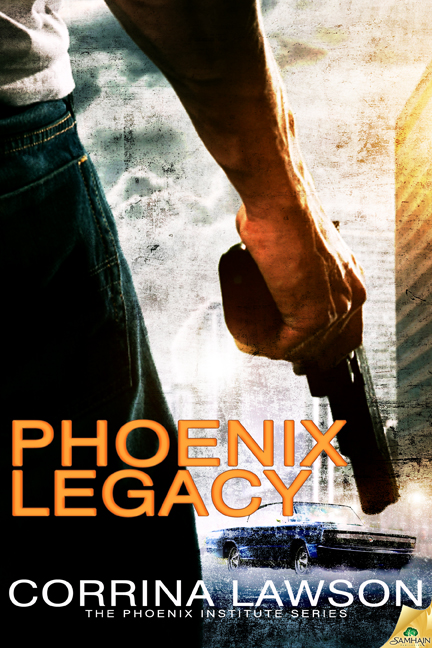
This came out in November
Turns out, I did. Three books, 180 blog posts, a comic story, two romance writing conferences, an anniversary trip with the husband, and a family vacation to New York Comic Con.

Whew.

Looks like I better get busy on 2013. I'm working on the next book in the Phoenix Institute series and on a super-secret comic project that I don't want to talk about until a full script is written.

I have about 45,000 words in the new Phoenix book and the rest plotted out. The advantage of a series is that the world already exists. The disadvantage is that I have to make things consistent in that world. Begin as you mean to go on, as the saying goes.

But...

I intended to string the series together by taking a supporting character from an earlier book and making them the main character of the next book. That gives them a nice continuity. SF/F and mysteries readers tends to use the same main characters throughout a series, like the Harry Dresden urban fantasy series by Jim Butcher.  A romance story, however, demands a new couple to fall in love with each book. At least, most of the time. There are exceptions, the most prominent being the In Death series by J.D. Robb/Nora Roberts.

My superhero noir story.
A different couple each story but make sure to have one of them be a familiar character. I can do that.

Okay, I veered from that formula with Luminous but that was a novella, a side story, and readers are forgiving of new characters in a side story.

Phoenix Rising featured Alec & Beth. Phoenix Legacy featured Philip Drake, a supporting character from the first book, and a new character as the heroine.

When I started Ghost Phoenix, I needed a new heroine but I intended to use Daz Montoya, a supporting character in Phoenix Rising, as the hero. Daz Montoya is an ex-Navy special forces guy who was, well, a GUY in the best sense of the word.

Unfortunately, Daz wasn't messy enough emotionally to carry a book. Turns out, he's surprisingly well adjusted. Good for Daz. Not so good for story conflict.

And so the villain of Ghost Phoenix became the hero. He's the brother of the villain who dies at the end of Phoenix Legacy, so there is some connection but bringing in his point of view also brought in all his complicated backstory (he's an immortal) and all of the supporting characters that go with *him* and not the Phoenix Institute.

I traveled a bit farther afield than I originally meant to do. Oops. It seemed to be the right plot and characters for the story. But it is a real shift in focus.

It's too late to stop now but I worry. Will those who read the other two books like this new focus even if I did make sure the Phoenix Institute characters appear and gave Daz a prominent role? Have I promised readers one story and delivered a different one?

I'm worried. But another part of my brain, the part that is okay with starting a manuscript with only a small idea of where I'm going, is saying "trust me, it will work out." I hope that the real hook for readers of a series is my writing voice and world that I've created. I trusted my instincts in creating the Phoenix Institute. Absent other evidence, trusting them again seems the way to go.

I've decided this isn't a deviation from the storyverse,

It's an expansion.

Corrina Lawson is a writer, mom, geek and superhero. Her website is located at www.corrina-lawson.com and the GeekMom Blog can be found at www.geekmom.com


09 January 2013

Back to Business...uh, well....

So this month we're talking about writing itself, and publishing, right? I probably had something bigger and grander planned for this post, but then, well, life happened. My husband had to have surgery, and instead of having time to write this up yesterday, I wound up waiting for the hospital to find my husband a room post-op. For three hours. After spending the morning in the waiting room waiting for him to come out of surgery. Shot the whole day.

Maybe that's a lesson right there. Life happens. Writing is not a 9-5 job for most authors I know, although many of us wish it could be (there are days I do too, but I actually like my job). I have a goal of 500 words per day. Not a huge amount, but when you hate writing first drafts like I do -- I am a champion reviser-- sometimes those words feel like pulling teeth. And I'm kind of in a funk right now. Graduate School ended in the beginning of December, and there were the holidays, and all this other stuff, and I had given myself permission to wait until January 1 to dive back into writing.

And then...well, stuff gets in the way. And now I'm turning into a champion procrastinator. I've tried to write some  every day, but I think I've made the 500 words, like, once. I'm just not feeling it, and I'm easily distracted. I think I need to go back to the beginning and read over the whole first 25,000 words and find the story again. Yeah, like I have time for that.

What was I saying...oh yeah. My advice for writers -- be flexible. Don't throw up your hands in despair if the time you set aside for writing gets eaten up by life's crap. I finally DID have time to work on my manuscript yesterday (and should have done it while waiting in the hospital, but there were too many distractions, and I had a book to read), and it was during my son's basketball practice. I find those times ideal for writing, when I have to be somewhere and not engaged with what's going on. But sometimes that's what you have to do to get it done.

Some people can sleep anywhere, I have learned to write anywhere. And now it really IS back to business for me. I have three books to work on this year, and one new edition to get out into the world. No more time for distractions.

Look, shiny!

07 January 2013

You're Only Jealous Because Stories Don't Talk to You

I am so excited. Seriously, jumping up and down pumping the air excited.

Did I win the lottery? Hubs hired me a house-cleaner? I found out I'm a bestselling author?

No. That would be the day. And oh man, I wish.

Don't laugh or call those guys in white coats to come take me away and I'll tell you my secret. Are you ready?

In the shower while I was washing my hair, the meaning of the universe was revealed, well at least in the universe I am creating. In short, the story I am working on told me what it's about. That my friends is worth an air punch or two.

This would possibly make more sense if I backed up and explained my writing process. Unlike normal authors, I don't necessarily know what I am writing. The story reveals itself to me in strange and unusual ways. To start at the beginning is to find a seedling of an idea, call it a simple kernel of truth, or a nugget so intriguing that I want to turn it over in my hand and hold it up for the world to see.

For example, Soul Stealer, came from a writing contest prompt about a man who kills a beautiful woman. I HATED that prompt. I almost didn't enter the contest because I write happily-ever-after-love stories. How was that going to work if the man kills the woman in the first scene? Unless...

Unless that man was Death coming to kill the one woman he can't live without. Now we're talking. ~rubs palms together.

The next part of my process involves the character sketch. So I have Death. Who is he? What's his background? What is he afraid of? Does he love, hate, or feel indifferent to his job? If he could changes things, would he? I sit down with a pad of paper and sketch out all that I can about this character.

I do the same thing for the heroine. Who is she? She's dying. Why? What would she give Death in order to live longer. He's been around forever and has heard it all. What could he possibly want from her? Why would she want to deal with him?

Once I know my characters pretty well, I jot down the scenes that I know have to be in the story. At this point I usually can "see" the climax and even the ending. I know where I want to go and have a general sense of how to get there.

But! This is the big BUT, the meaning of the universe has yet to be revealed. The deep down core meaning of the book needs to come to life. It's frustrating, really, but it takes time for that kernel to grow into a tree. Many times, if the core meaning is really deep, I need to write half the book to find it. It's like digging and digging in search of treasure buried deep in the pages. When I find the loot? Air pump!!!

This happened to me this morning. In the shower. Yes, the stories talk to me. Thank goodness.

www.kimberleytroutte.com

06 January 2013

You mean I actually have to write?

This is something I struggle with as a writer - that sounds rather like an oxymoron doesn't it?

I'm good (maybe even great) at a lot of things writers have to do:

1)  Plotting - I love deciding where my story is going to take place, who the characters will be and what the struggles will be.  It's something I've actually gotten much better at over the years.

2) Promotion - I enjoy meeting new people at conferences, teaching online classes, touring blogs. Interviewing people on my blog.  It connects me to readers on more than a "buy my book" level and I think that's very important.

3) Editing - I would have to say while this isn't my favorite part of the process, I find it much easier than writing itself.  I'm not an author who is attached to every word or phrase.  I'm not even emotionally attached to certain plot devices even though I love that piece.  Ultimately I trust my editors to have the knowledge of what their readers expect from the house as well as my work.

 And then there's Writing - This is the painful part for me.  I'm not talking about the first 30 pages here.  I'm talking about the transition between scenes,keeping sex scenes fresh and which POV do I write from?  I tend to over think this part of the process - a lot. 

If I hit a bump at all here - I tend to avoid it.  I've tried all the tricks to put my butt-in-chair and type.  Fake deadlines, write or do housework, force myself to sit there and stare at the screen for an hour.  It just doesn't work for me.  And of course with a day-job it's a lot easier for me set writing aside as an excuse that I'm tired, don't have time, etc.

I'm not a Write-or-Die writer.  I truly admire those who have to write.  Of course I'm sure they have their own troubles with this business but it's unlikely writing is one of them. :)

Once I do actually sit down - I can usually stay there for a full eight hours finally having the ambition to finish or get close to it.  I love typing "THE END", because then I get to move onto: Plotting, Editing or Promotion.

Who knew to be a successful writer...you actually had to write?  :)


02 January 2013

Inside View

A day in the life is, for me at least, like life for any other stay-at-home mom. I get the kids out the door for school, get laundry in the washer, tidy up the kitchen, make a few calls, and then I try to get to work. I run in one hour blocks, with half an hour off in between to take care of housework, food, and the most important thing: coffee.

When Hub and the boys get home, I'm SuperMom once again - we do homework, make dinner, clean up, and do bedtime.

Evenings, I either crit for friends, edit for the epublisher I work for, or try to get some more wordcount in before I sleep.

Once the book is done, I tend to send an exhausted email to my critique partners, who then read it for me, reassure me that I'm a good writer before telling me all the places I've messed up, and all the work I need to do to make what I've written into something that other people could/should read.

Then there's a week or two period where I decide which suggestions work for the story, which ones I can make, and how to address everything that needs to be fixed. Once that's done, I send the story back out again for another readthrough before subbing it to a publisher, agents, wherever that book is going. (and deciding which is which? That's a whole process in itself!)

Then it's a matter of waiting. And pretending you're not.
I hate waiting. I'm not good at it. I'm one of those people who, when they're in line, can't read a book or play a game or anything else. Because I'm already doing something. I'm waiting. So this part is pretty much agony.

Eventually, you get word back - in my case, for my first book, an R&R which said I'd done lots right, but my ending was weak. (it was, I admit it.) So, I changed it, sent it back in and...waited.

Fortunately, my editor had been waiting for me, too, and sent me a contract offer rather quickly.

Then edits. I'm not going to linger on that process. It requires a lot of chocolate, coffee, and reassurance that I don't suck. Somewhere in that process...I get to see cover art, which is when the whole thing starts to feel like a real book. (My covers were created by the FABULOUS Anne Cain. They're amazing, and I'm so lucky to have them.) Then the wait until the proof is approved by management, at which point I can finally share the image with people.

And then more waiting until the book, now finished edits and on its way through formatting, is released into the wilds. Waiting for the first review...

Writing involves a lot of waiting. Most of it the on pins and needles kind.

Have I mentioned I'm really bad at waiting?!


23 December 2012

The Phantom of the Opera

Okay, I've talked about this before. Many times.

The Phantom or Erik, is my favorite dark hero.

I’ve heard a lot of nay saying about him, like “He’s a crazy sadistic, stalker, murderer dude.”
Okay, sure, but he’s a broken soul. Scarred and unloved. All he loves is Christine Daae.
The moment the Phantom walked out onto the stage back in 1992 when I first saw it, in Toronto at the Pantages theatre with Colm Wilkinson I fell head over heels in love. I hate Raoul. Still hate that pretty boy to be honest.
And at the end of the opera, when she leaves him for Raoul, but come back one final time to kiss him *fans self* swoon. My husband knows if he wants to get me in the mood fast he just has to put on the Phantom with Gerard Butler.
*ahem* Sorry I know, TMI.
Gerard didn’t have the voice range that Colm did, but DAYUM, even with half his face horrifically scarred he is mighty fine. That scene from Past the Point of No Return gets me hot under the collar all the time.

I wanted to know more about the Phantom. Where did he come from? What happened to his face? This is why I’m so fascinated and attracted to him. What made him the way he is and how can I heal him? ;-)
Not much is known about the Phantom at all, other than his name is Erik and a few snippets from this song:
This face, which earned a mother’s fear and loathing…
A mask, my first unfeeling scrap of clothing…
 Even though Christine left the Phantom, his love for her remained true. He left her alone, but watched from afar. True to her, even though rich annoying pretty boy got her, he remained faithful even placing the rose on her grave years later.

And this final kiss scene *swoon* gets me every time. EVERY TIME.
The musical made such an impression on me, I was 14 at the time, I wrote copious amounts of fan fiction and would act out the musical in my room, alone, singing to the tape I bought from the souvenir stand.
It also helped fan the flames of my burgeoning romance writing career. No I don’t write about stalker/murders with half melted faces …but I’ve been tempted! >:)
It’s safe to say that The Phantom is my first ever dark romance hero.
Who’s yours?

21 December 2012

Happy Doomsday!


My kids, bless their little hearts, asked me if the world was really going to end today. I said, “No, honey. The Mayans just ran out of fingers and toes to count on.” 

This is actually a pretty egregious disservice to the civilization that gave us 0, thereby screwing over millenia of math students, but making binary coders blissfully happy.

Still, predicting Armageddon is getting to be a little monotonous. I mean, as far back as I can remember, the end of the world has come and gone at least eight times. But I still keep getting up in the morning. No cars have mysteriously and suddenly lost their drivers in a cloud of glory. Asteroids keep missing us. The moon is still in orbit.

Yep. Life goes on.

Nuts. I guess that means I’d better figure out what’s for dinner tonight!

20 December 2012

Dark and Delicious


We are gathered here today to discuss that noblest of foods, the very heart of which is a chemical compound so divine it is called "theobromide," or "food of the gods":

CHOCOLATE

And not just any chocolate, either, folks; no, today, we are gathered to discuss the only kind of chocolate worth discussing and that would be

DARK CHOCOLATE

Dark chocolate even has articles written about its health benefits.  But here's the thing, folks:  dark chocolate means you get more sex.  It means you're more intelligent.  It means you're funnier and more attractive.

In short, dark chocolate is the perfect food.

Dark chocolate in coffee is even better.

And dark chocolate drizzled on my lover's stomach to be licked off...


In the meantime, while you're waiting, here are some chocolate links:


15 December 2012

The Dark. The Delicious. The Scrooge?

Marley's ghost confronts Scrooge.
(John Leech, 1843)
My husband claims the lessons of A Christmas Carol are in keeping with any situation.  I thought he was blowing smoke until I sat down to write my “Dark and Delicious Heroes” post for this month’s Beyond the Veil.
 
Scrooge is the ultimate dark romantic hero.  Who knew?
 
Seriously.  He’s older.  (Way older.)  He’s intelligent, frighteningly competent and experienced in a variety of lethal skills.  You think Jason Bourne’s a killer?  When it comes to kill counts, the Jason’s a piker.  A single one of Marley & Scrooge’s foreclosures would’ve taken out whole neighborhoods without the need to resort to a single anti-personnel weapon.
 
And messed up?  Let me count the ways.  His mom died giving him birth.  His father hated him and sent him off to one of those dreadful British boarding schools for years.  He lost his beloved sister in circumstances painfully reminiscent of his mother’s death.  The ultimate in internal conflicts got between him and the love of his youth.
 
While we’re at it, let’s not forget the paranormal angle.  The story features four named ghosts and a host of lesser spirits wailing at the fringes.  Gotta count that toward his score on the dark side.
 
Most importantly, he is spectacularly redeemed by the end of the story.  In fact, his redemption is so spectacular, we feel compelled to repeat and embellish it year after year in readings, plays, movies, parodies and cartoons.  For some of us, it just isn’t Christmas until some form of Scrooge wakes up on December 25 and realizes everything is different, today and forever after.
 
Like Corrina, I think this possibility of redemptive change is the reason we love literature’s bad boys.  If Scrooge can find his way back to his humanity and love, so can we all.  We love him, because his transfiguration is the mirror of our hope. 
 
The same applies to Romance’s dark and delicious heroes.  When it comes to genre books, we may not seek out the exact same hero every time, but we certainly crave that rush of hope.
 
Which makes these heroes such a good topic for December’s blog.  Through them we hope, and through that hope we find a reason to brave the rolling year.  Not too shabby for characters with seemingly no redeeming social value.
 
Wishing you and yours the best of the season.  May your Hannukah, Solstice, Christmas, Kwanza and New Year be filled with wonderful surprises and a thousand reasons for hope in 2013!
 
Happy holidays!
 
Jean Marie Ward