05 April 2013

Curiosity Made an Author


I’m insatiably curious. Before the advent of cable TV and the internet that character trait got me into all kinds of trouble because reading the books available to me (including the encyclopedia) wasn’t enough. I used to try and get into people’s business. I wanted to know everything and sometimes the only way to understand was to boldly go where most others had sense not to venture. Now people reveal the most intimate details online, even stuff I’d hesitate to talk to my husband about.

Yeah. The interwebs is my friend. It provides me with more fodder than I could ever use. My ‘favorites’ folder is filled with sites that provide obscure information about a huge variety of subjects but, strangely enough, I rarely turn to it for inspiration. Instead, it’s actually a by-product of roaming the internet researching an idea, hoping to find something to fill it out. The inspiration itself comes from that basic part of my character, which hasn’t changed with age—I’m still horribly curious.

I’ll hear a passing comment on the bus, see a picture on TV, read an article in the newspaper or online, and something in my brain goes, “TWANG! What was that???” It can be one little thing, one little detail, and I’m all over it like a cheap suit. Richard the Lionheart spent very little of his reign in England. Remains of red-haired Caucasians were found in ancient Chinese tombs. Vikings blanketed the known world during their heyday. The ancient Romans had dildos. Ballroom floors were chalked, sometimes with elaborate murals done by talented artists, before balls.

Any tiny snippet of information can set me off and the next thing I know, I’m researching and then weaving a story—usually either in the shower or in bed, as I drift to sleep. Often the storyline starts with, “Suppose…” or “What if…”. Sometimes the evolving story doesn’t even include the piece of information I started out with, but without that kernel, that catalyst, the story wouldn’t have come into being at all.

So, if we happen to meet in person and are talking, and I suddenly look as though I’m in a trance, you’ve probably said something to get my twisty, turny brain whirling. But don’t worry, I change all the names in my stories to protect both the innocent and the guilty! J

04 April 2013

Generating Ideas: What the Heck Does Big Valley Have to Do With Steampunk?


I watched the Big Valley growing up, mostly on lazy Saturday afternoons. I started watching again a couple of years ago when the Inspiration Channel began running it twice daily. Soon my DVR was full of Big Valley episodes. I even blogged about what you can learn from watching the show. Hint: do not mess with Barbara Stanwyck. It never ends well.

Watching it made me want to write a Western. But then I realized that while the setting attracted me, what really hooked me on the show were the characters. Three brothers, all different personalities, all with different strengths and weaknesses. Hmmm...three brothers, different templates, different types of heroes..aha...

It so happens I need to add some brothers for the hero of my steampunk romantic mystery. The hero of those stories is based on Sherlock Holmes but I twisted his origin a bit. My consulting detective is the youngest son of an English Duke by his much younger second wife. The wife also happened to be Indian, so while my hero isn't illegitimate, he's definitely considered a half-breed.

Without realizing, I'd created a youngest son, a half-brother from a lower class who resents that he was not completely accepted as a member of the family. In other words, someone very like Heath Barkley, the youngest son on Big Valley.

The next book in the series (as yet unpublished but hopefully that will change) will send my detective to his family. And now I have a good idea what his older brothers and his mother will be like.

The lesson? Ideas are all over. And they can germinate for literally years before making their way into a book, as my love of Big Valley did. They can come from completely unrelated subjects. Learning about plant biology gave me an idea of how the magic works in my steampunk story. A vacation to Maine years ago made its way into Phoenix Rising in the form of the cabin where the heroine takes the hero to get away from it all.

It's the writer's mind. It's when I've sliced my knee open and I'm about to faint and I wish I had a notebook handy so I could write down what it feels like just before a person faints.

So where do I get my ideas? As Sherlock Holmes once said, people see but they do not observe. I try to observe and absorb as much as possible. :)

Corrina Lawson is a writer, mom, geek and superhero. You can find her at www.corrina-lawson.com


03 April 2013

My Journey into Self-Publishing


Yeah, okay, so I self-published a book. For the record, I have no problem with self-publishing, EXCEPT when people do it half-assed and expect to make millions. First of all, historically that's not been the case. You have your one or two exceptions, but overall many self-published books are flops. And those that DID make a boat load of money will tell you that they did it RIGHT, and that means they spent a lot of money and paid people to help them get it out right.

So why did I do it? A list:

1. This is not my first book. I've been through the commercial publishing process before, so I KNOW what's supposed to happen.
2. This book is made of two republished short stories. There is a novel that goes with them, and the original publisher never did anything with them, but they are part of a shared universe, so I can't submit them to any other publishers. I have permission to put them out myself, or else they'd never see the light of day, and that would kind of be a shame.  
3. Along with #2, these works have been edited. By myself, by the original series editor, by me again. They may not be perfect, but they're not fresh off the word processor, either. I am not one of those authors who thinks that the publishers 'just don't understand my voice' , nor do I have Golden Word Syndrome. I think there are a good number of self-published authors who turn to self-publishing for these two reasons. And then they get mad when the reviews trash their books. 
4. I'm not planning on making a lot of money with them. I'm not pushing these books. They are mostly for fans to have something else of mine to read, and for me to buy a few copies to take to events, and to even give away free on Kindle once in awhile. It's for FUN. 

IF I were to ever self-publish a work that I really wanted to push, there are several things I would do differently. I would:

a) Hire an editor. Not that these haven't been edited, but if I were publishing a story NOT in a shared universe, I would definitely find a good editor and PAY them. I would also have them help me write back cover copy.
b) BUY an ISBN myself, and give myself a publisher name. I got a free one from Amazon for this one, and they get to be the publisher of record. No biggie for this book, but if I were putting out an original work that I really wanted to push, I would.
c) HIRE a cover artist. I chose Amazon stock art for this first book, and paid a modest fee to iStockphoto for the cover art for the novel (which is almost ready, I just have to finish writing the back cover copy).  I used their flat template too, and would have the artist design one specifically for my book. 
d) I would fill out all the forms for the Library of Congress and register the copyright. I didn't do either this time, because, like I said, these books are pretty much for fun.
You can see that all of these things cost money.  And that's always my point about self-publishing -- if you're gonna do it (and not just for fun), you need to PAY for the things a publisher pays for.  And if you don't have any idea what a commercial publisher does, then you'd better LEARN before you get started.

Now, myself, I have managed to figure out how to format the book for both print and Kindle (which was an ordeal, but now that I've done it, I can do it again and faster), but if you're not tech savvy or don't have the time (and it WAS time consuming), then you're going to need to HIRE someone to do that for you as well. 
On the up side, now that I've done it, I kind of have some insight into what it takes.  CreateSpace/Amazon and Kindle Direct Publishing is a good way to go. 

There are some things they don't tell you about Kindle formatting (which I had to find out through the forums), but once you figure them out, it's a piece of cake.

By the way, here's the link to the new book: Wizard Academies: The Kingsbridge Chronicles (paperback) and Wizard Academies: The Kingsbridge Chronicles (Kindle Edition).  You can download a sample from the Kindle edition and check it out! 

01 April 2013

Fresh Ideas, Where Do They Come From?

The simple answer? Everywhere.

Real life is fodder for my fictional worlds. Anything and everything goes. 

If a subject interests me, I will read all I can about it. My author brain likes to take the interesting topic and say "what if". 

For example, when researching earthquakes I wondered what it would be like to be trapped in one. And what if a claustrophobic heroine--who's greatest fear is being tied down--becomes buried alive during an earthquake and must trust the hero--who's greatest fear is losing the woman he loves--to search the rubble and get her out before the world crashes down. 

Sometimes an idea smacks me upside the head when I least expect it. Like when I'm in the shower or exercising. 

We've all seen Psycho, so let's skip the shower scene. But what if during, say, a yoga class the students wear blindfolds and the heroine accidentally wanders onto a mat that isn't hers. With her hands in front of her she bumps into a hard male who uses his hands to figure out who she is. Who is he and why does he whisper her name? 

Stories are all around us. It just takes a little "what if" and imagination to turn an interesting topic or setting into a seller. 

 www.kimberleytroutte.com

22 March 2013

Betrayal and conflict

"It is easier to forgive an enemy than to forgive a friend." (William Blake)

Betrayal can create the strongest conflict in any type of story. It fuels a wide range of emotion from anger to depression. It can take an otherwise average character and turn them into a vengeful hero, heroine or villain.

There are a lot of great examples of betrayal and its aftermath in one of my favorite television shows: Once Upon a Time. From a young Snow White's innocent betrayal of a secret, to Rumpelstiltskin's manipulation of, well, everyone, to get what he wants... the show is ripe with examples of betrayal and conflict.

In a television series, it's a bit easier to deal with conflict because as a writer you have plenty of time and room to play out a storyline without it feeling forced or rushed. In a novel, however, it isn't quite as easy. Your space, as it were, is more limited. If the betrayal is too unforgivable, but you need the character to forgive, as a writer you have to craft the story very carefully.

I've written characters that have betrayed one another or seemed to (Jason and Sabrina in SECRETS AND SHADOWS). I have characters that betrayed themselves through addiction (Ian in DREAM WALK) and other bad choices. Then there are characters motivated to become heroes by a betrayal of some sort (Camille in DREAM WALK).

Finding that balance between the desire for justice and the need to forgive -- it's a conflict as old as time. What act or action is just too unforgivable? It depends a lot on your characters, the story itself, and how you handle it. Telling a secret is more forgivable than, say, infidelity, which is likely the most difficult conflict in any romantic relationship, be it fiction or reality.

Now I need to get back to my work in progress (wip), and another betrayal of sorts: withholding the truth. Telling the one you love a lie is a big no-no in the romance world. It creates mistrust and can destroy a relationship unless, at some point, the one lied to is willing to forgive. Will she? Won't she? I'm not telling... but just remember I do write romance, and there's always a happy ending.

~~Meg Allison
 Sultry romance cloaked in suspense...
Sweeter stories laced with laughter.
http://www.megallisonauthor.com

17 March 2013

Betrayal in Song

I thought I'd share some of my favorite songs about betrayal, because my brain is in deadline heck and I really can't string together coherent sentences at the moment. :)


FORGET IT: BREAKING BENJAMIN WHO KNEW: PINK WE ARE BROKEN: PARAMORE Here's one from my highschool years YOU OUGHTA KNOW: ALANIS MORISSETTE MY NEXT BROKEN HEART: BROOKS & DUNN What are some of your favorite songs about betrayal?

14 March 2013

Betrayal - Eat Too, Brulee?


Betrayal is our theme this month and I have a doozie: FOOD PUSHERS!

That's right, folks, food pushers.

If I were a ghost, no one would try to stuff me full of cake.  But no.  I'm not a paranormal phenomenon, I am a flesh-and-blood creature who apparently likes cake.  Lots of cake.  Including the cake my coworker brought in today, a confection gleefully called "Lemon Cake."

Lemon cake?  Be still my heart.  Lemon is only my second favorite dessert flavor, you cretonous carbuncle!  The only thing better than homemade lemon cake would be homemade chocolate peanut butter cups.

Don't get any ideas.

Betrayal of the waistline by the taste buds.  Could there be anything for heinous?  More foul?

Oh, fine.  I will throw in with these food pushers, these providers of cake and chocolate and all things that make us bigger than life.  Hah!

Did you know there's a God of Cake?  No?  Check it out, here.

And if THAT wasn't enough, fellow BtVer Kimberley Troutte and I have a brand-spanking-new cookbook, hot off the keyboards, for your enjoyment!  Check out COOK LIKE A WRITER, available for download free.

12 March 2013

Betrayal: The Best Kind of Conflict

Given it's close to the Ides of March, betrayal is a perfect topic for the month.

Julius Caeser, of course, isn't a romance, but it wrings incredible pathos out of Caeser's betrayal by Brutus and Cassius.

Shakespeare's Romeo & Juliet is a romance and it's also fueled by betrayal. Do the lovers stay true to each other and betray their families? Or stay with their families and not each other.

Their answer was intended to find a way around the conflicting loyalties. We all know how that went.

Betrayal is the best kind of story conflict because it's something we've all experienced and so hard to recover from. Every romantic break-up is a form of betrayal, as our partner is revealed as not the person we thought them to be.

That's why it hurts so much.

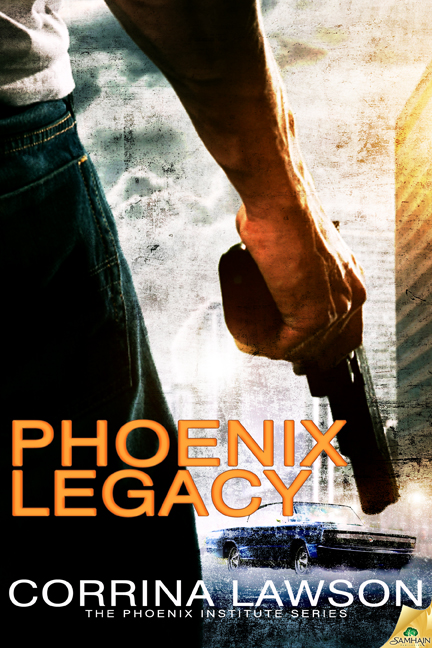
In Phoenix Legacy, I raised the stakes between my hero and heroine by putting a horrible betrayal in their background. Philip Drake's background was inspired by the film Running on Empty, where former 60s radicals are on the run with their two young children. Except in my story, unlike the movie, Philip's parents are very bad people.


And to get away from them and protect the only person he loves, Philip does a horrible thing and the one he loves views this a betrayal so terrible that she'd gladly spit on his grave.

Sometimes, I have problem with the conflict between a hero and heroine when writing stories. In Legacy, I had the opposite. I worried the conflict was impossible to overcome.

It takes some time and a little bit of bloodshed but they do work it out.

I'm currently working on the next book in the Phoenix Institute series and, perhaps because betrayal was on my mind, I set the plot up so that the hero and heroine would be faced with a choice, like Romeo and Juliet, between each other and their families. These  conflicting loyalties fuel to the story and, I hope, give it some poignancy.

There's another kind of betrayal that happens in stories too, one I haven't tackled yet. It's the temptation to betray oneself, to make a choice that the character knows isn't the right one but they want something so badly, they don't care. Macbeth makes this choice and regrets it. But the best book I've read about this kind of betrayal is Memory by Lois McMaster Bujold. In that book, Miles must make a choice between his double identities, as it seems like claiming one is betraying the other.

But, he concludes, "the only thing you can't betray for your heart's desire is your heart."

Corrina Lawson is a writer, mom, geek and superhero. She's the author of the Seneca series set in ancient North American, the Phoenix Institute superhero romance series, and a Senior Editor at GeekMom.com. 

11 March 2013

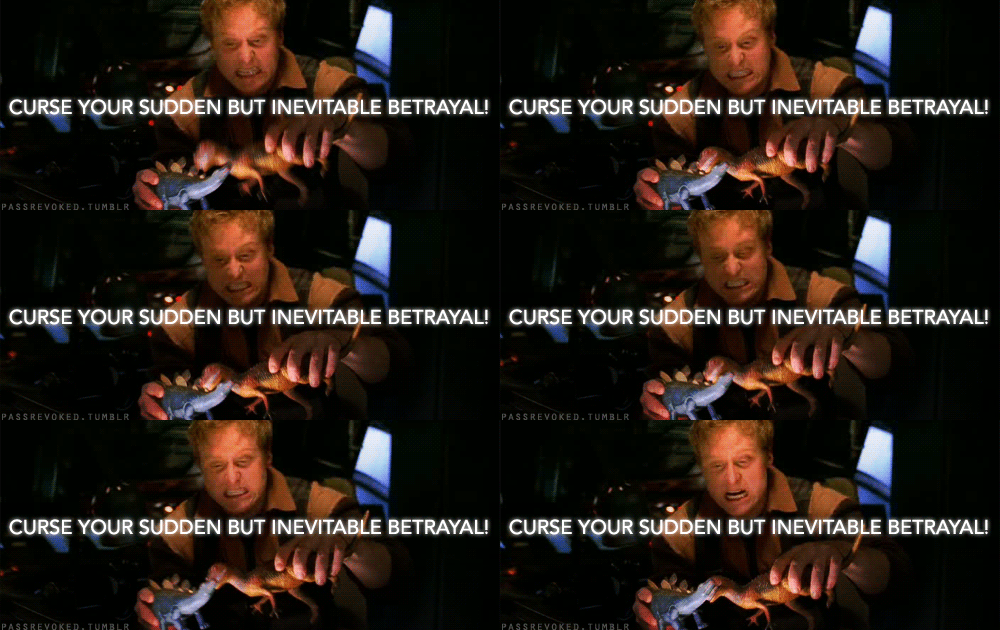
Curse Your Sudden, But Inevitable Betrayal


 Greetings Kittens,

For those of you who can’t place the reference, it’s Wash, from Firefly. And yes, I’m still bitter it was canceled. After all this time? Always. (Yes! I just successfully mixed fandoms in an absolutely relevant way, fellow geeks holla!)

I’ve given a lot of thought to this month’s theme of betrayal, and after going through all sorts of fictional and historic betrayals, I decided to blog about medical betrayal, specifically, when your own body betrays you.

I have Myalgic Encephalopathy/Chronic Fatigue Syndrome also known as Chronic Fatigue Immune Dysfunction Syndrome or ME/CFS and CFIDS, with Fibromyalgia Syndrome presentation. This causes disruptions in the central nervous system, immune system, neurological and endocrine system. My personal symptoms include insomnia and non-restorative sleep, IBS, concentration issues, daily headaches, sensitivity to noise, lights and touch, nausea, vertigo, muscle weakness and joint discomfort, widespread body aches, and bone deep fatigue.

Of the 17 to 20 million world wide who have ME/CFS, we each experience it a little differently. The thing that binds us, is the post-exertional neuroimmune exhaustion. That’s a catchy way of saying average physical or mental activity can wipe us out for hours, days, even weeks, depending on the severity of the individual illness. Some days, some months, I make it through. Other times like now, I miss a week of work because I’m in the bathroom every half hour, or I can’t sit up in a normal chair for more than a few minutes at a time.

Many feel ill and exhausted most days. A quarter of us are acutely disabled by ME/CFS, left wheelchair-bound or housebound, even bed-bound. ME/CFS can grow severe enough that even swallowing is no longer possible and patients must have feeding tubes. A 2011 study showed ME/CFS to have a mortality rate of 12.5%

The exact cause is unknown, but the onset has been linked to viral infections, immune dysfunctions, stress and even accidents. At the core, it appears to be an altered physiological response to bodily trauma brought on by illness, injury, stress or toxin exposure, that then damages the central nervous system and compromises immune function.

ME/CFS has no cure, and the treatment covers a wide variety of options from drugs to nutritional changes. That is, when you can get a doctor to treat you at all...

I was first diagnosed in 1992 and twenty-one years later there are still some doctors who don’t acknowledge it as real. This despite the fact that it has been studied and accepted by the World Health Organization, National Institute of Health, the CDC and FDA. Less than three weeks ago, the FDA met to discuss the efficacy of the first drug specifically for ME/CFS and the NIH is looking to increase clinical trials. All of the top medical organizations know what I’m going through, but I’m still struggling to find a doctor in my network.

Raised in the Western world, doctors are held up as the people with all the answers. It is a deep abiding sense of betrayal when they don’t even want to hear the question.

That said, there is still nothing quite like the unique betrayal of your own body holding you hostage, with little rhyme or reason. Some days I can dance and sing and have a wonderful time. Other days, just standing up can knock me flat. Foods that were fine on Monday, can leave me camped out in the bathroom on Wednesday. I can crank out a 15k novella one weekend, and be unable to concentrate for a full paragraph a week later. I’m open and full of hope and ready to take on the world at 12pm, and I need to go back to bed at 2pm. And I never know which day, which hour I’m having, until it’s there.

I lived a blessed few years in remission from 2005 to 2008, by 2010 I was in a down cycle, but pulling out of it. By 2011, I had fully crashed and I haven’t recovered since. I disappeared in 2012 because I didn’t have the energy to both work and do anything else at all. I couldn’t think, I couldn’t write, I couldn’t even chat with friends, it was all just too much.

I started slowly coming back from the isolation and withdrawal at beginning of the year, mustering up mental reserves and holding tight to the concept that I just need to make it a little further. That’s been working as far as interacting more, but physically, I’m still bouncing back and forth between making it through and falling apart. I’ve gone from feeling like I can come roaring back in 2013 in January, to realizing I may need to look at applying for disability in March.

Perhaps the deepest sense of betrayal comes from truly believing everything is going to be all right, while still having to live in a present where everything, is anything but...


There you have it, my current thoughts on betrayal, and a little insight on where I've been. 

Ramble Done, Kittens!

~X 


P.S. For more information on ME/CFS please follow the links below. If you think you might have ME/CFS CFIDS or Fibromyalgia Syndrome, please see your doctor and keep seeing doctors until someone helps you. If you know someone with ME/CFS, please spread awareness, it’s not “just being tired”, and we can’t “just feel better”. And if you just want a piece of advise for dealing with anyone you might encounter with ME/CFS, CFIDS or FMS, here’s a good one; never, ever say “but you don’t look sick".


09 March 2013

The Yellow Fever Plot

Luke P. Blackburn
I've got a problem with literary and dramatic portrayals of betrayal.  They're so damned obvious.  Of course, your best friend will pull the rug out from under you in the fourth act.  It's drama.  Failing that, it's politics.  C'mon, Mr. Ides of March, you mean you never noticed your "natural son" wanted a bigger piece of the action.  This is Rome--Hellooo! Ditto, most historical cases.  Backstabbing, assassinations, musical chair loyalties--they're the facts of life at any seat of power.  In Japan's Warring States Period, for example, you not only couldn't tell the players without a program, you needed a new program every eight minutes.
But sometimes, people betray what they are.  The U.S. saw a lot of that in the Civil War.  One of the most egregious cases involved a doctor.
Luke P. Blackburn was a Kentucky doctor routinely proclaimed a hero for his efforts to succor yellow fever victims.  He was also a loyal son of the Confederacy who wanted to use his expertise to aid the cause.  Not by ministering to the ill and injured, though he did some of that.  No, Blackburn sought to use his knowledge of yellow fever to commit what might have been the largest case of bio-terrorism in American history.
Yellow fever was one of the 19th century's most feared diseases.  Over the course of the century it would suddenly appear in the Caribbean, New Orleans, Philadelphia, even New York, and within days thousands would die in great pain, jaundiced from liver damage and vomiting blood.
By the time of the Civil War, medicine had advanced to the point where most doctors understood the concept of contagion--that infections could be spread by contact or, more importantly, contact with a diseased individual's bodily fluids.  As a result, Blackburn and many other doctors had embraced the then radical practice of washing their hands after dealing with each patient.
It's likely Blackburn attributed his immunity to the disease, despite treating so many yellow fever sufferers, to good hygiene.  If that was the case, the reverse must also be true--whoever touched the sufferers, their belongings, or their blood, urine and vomit, was at grave risk of contracting the disease.
So, after treating the victims of an 1864 epidemic in Bermuda, he collected their bloody, vomit- and urine-stained clothing in several trunks, and arranged to transport and sell the trunks in various northern cities and Union-occupied territories.  Purportedly, he even took credit for a yellow fever outbreak which killed over two thousand in a Union-occupied town.
This is a betrayal of epic proportions.  All is not fair in love and war.  It hasn't been since the 6th century B.C., when an alliance of Greek powers wiped out the city of Kirra by introducing hellebore root into its water supply.  "No poison" remained one of the few inviolable principles of western warfare until the early 20th century.
The general repugnance at the Kirra atrocity was so great, it is believed to have played a key role in the creation of the Hippocratic Oath, the basis of all medical ethics.  The fellow who devised the hellebore plot was a medical man named Nebros, who may have been an ancestor of Hippocrates of Kos.  Many Greek historians believe Hippocrates came up with the oath in an effort to expiate his ancestor's crime and distance medical practioners from the stain of his genocide.
In any event, the key provision of the oath, the same oath Blackburn had sworn to uphold, is to abstain from doing harm.  I think we can say he totally blew it.
Admittedly, much of the evidence of Blackburn's intent comes from a turncoat rebel who was well paid for his testimony in 1865.  However, independent investigations in Bermuda turned up hard evidence that Blackburn had been collecting the clothing for no comprehensible reason.  He wasn't saving the garments for the victims' relatives, and he didn't need the money the sale would bring.
Eventually, he was brought up on charges...in Canada, where he'd fled to avoid Union harassment.  Blackburn refused to testify at his trial, and ultimately all charges were dropped based on various technicalities.  It didn't hurt that he had money and was eager to get back to his work...with yellow fever victims. 
He returned to the United States in 1867 to minister to the victims of an outbreak in New Orleans.  He still didn't catch the disease.  Ultimately, he went home to Kentucky where he was elected governor.  Which goes to prove, girls and boys, that crime does pay--if the voters happen to agree with your position in "The War of Northern Aggression".  Four years after his death in 1887, the state erected a granite monument over his grave featuring a relief of the Good Samaritan. 
Never let it be said the universe lacks a sense of irony.
Perhaps even more ironic is that his plot couldn't have worked.  He may have taken credit for those two thousand deaths, but the clothes he so carefully collected had nothing to do with it.  Disgusting as the disease's black vomit is, it plays no role in the transmission of yellow fever.  For that you need mosquitoes.

Jean Marie Ward

If you'd like to learn more about Luke P. Blackburn and the Yellow Fever Plot, Wikipedia's article on the governor is a good place to start.  My favorite bit of trivia is the fact he graduated from Transylvania University.  Yeah, I know it's in Kentucky, but you've gotta admit Dracula would've loved him.

08 March 2013

Betrayal... It's In Us


It’s In Us

The friend who muscles in on your boyfriend while you’re away. The family member spreading the secret he or she swore to take to the grave. Politicians caught with pants down or hands in the collective cookie jar. Back-stabbers, false smilers, sucker punchers.

We’ve all experienced it, or seen it. Read about it in the history books. Bought that rag magazine because of the headline, “The Nanny Stole my Husband!” Kept the channel on Dr. Phil’s show.

Betrayal.

Just the word gives us a shiver. It’s one of those impulses we’ve all had, occasionally perhaps succumbed to and can’t stop ourselves from watching unfold when it happens in our vicinity. Like the pictures of a train wreck or car crash. You want to be strong enough NOT to look, to show the strength of disapproval or the purity of your soul by looking away, but can’t. It’s such an integral part of the human condition it’s inescapable. Whether in the end you feel it was a good thing or a bad, can understand why the betrayer did what they did or not, it still leaves a fearful, distasteful sensation in the back of your throat. If Marcus Brutus, welcomed into Julius Caesar’s inner circle, given positions of power, regarded as a friend, could raise a hand to stab Caesar, what are those around us capable of? We shudder to think.

So we guard against and watch for it, always aware of the pain and destruction betrayal can cause. We restrain ourselves from giving in to the impulse to betray those around us—keeping the secrets no matter how juicy, biting our tongue when we could get others in trouble, turning away when tempted. Yet, on a deep, dangerous level, we often want to give in, to betray someone’s trust for our own gain or pleasure, or maybe even just for the fun of it…

We’re human. No matter how civilized we believe ourselves to be, it’s in us. We can’t help that, although we can keep it in check when necessary. So we do the next best thing to actually giving in—we read and write about it. Harmlessly get our fix of drama and danger through the pages of a book, even as we keep our eyes peeled for the real thing in our own lives. Putting the dagger in someone else’s hand, watching it rise and fall, yet knowing no real people were harmed in the bloodshed fulfills a basic human need—an atavistic desire to get what we want, to appear important, to do whatever we will with no one to tell us, “No.”

And, because most often we write or want to read about the betrayer getting his or her comeuppance, we fulfill another need by making them fail, get caught, pay for their betrayal in some way. We get our happy ending without having to succumb to another of those ugly, primal needs we all feel—the one that makes us want revenge.

06 March 2013

Telling a story with Tarot


I read Tarot Cards. There, I said it. I don't do it all the time, and I do it for fun and not as something I use to run my life. When I read for other people I am always careful to make sure they understand it's for entertainment purposes and that I am not telling them to skip town and start a new life under an assumed name in Bora Bora. 


Unless, of course, they're actually into that. But then that's their decision, not mine. Whatever. The point is, that when I read the cards, I tell a story. I had this discussion with a fairly famous agent at the last NJSCBWI conference over dinner, and he, surprisingly, was fascinated by the way I described it. I don't read just one card, but try to see how they all connect together. 

I tell you this because there are writers who use cards to plot a story. Not me. But I find that reading cards and telling a complete story is really great for flexing my storytelling muscles, finding the one aspect of this card and seeing how it fits into the others that have come up, like fitting puzzled pieces together. Sort of the way that really good stories seem to come together. 

I have several decks, but my favorite is the Steampunk Deck. I have a Fairy Tale deck that I also like, but that is harder for me to work with. Who knows why. My favorite thing about the Fairy Tale deck is for me to know the story behind the image (and some are pretty obscure) in order to see why the artist chose it, what part of the story connects to the meaning of that card. Little Match Girl, for example, is the Three of Swords. It's a card of heartache, three swords through a heart. The Little Match Girl is a perfect story to depict heartache (and always makes me cry). 

 Anyway, if you want to learn to read Tarot to help with your writing, I recommend it. You don't even have to learn the meanings of the cards, if you don't want to. Get a deck with pretty pictures (I recommend ones with actual humans, not Cat People or Dragon or anything) and study the pictures and try to come up with a story that goes along with them. Soon you'll be piecing together all kinds of stuff, and maybe story construction will become easier for you.  


05 March 2013

Packing for Madicon


Thursday will find me on the road to Harrisonburg, Virginia, and my first stint as a guest of honor at Madicon, James Madison University's science fiction, fantasy and gaming convention March 8-10.  With me on the bill are good friends Jana Oliver, Tee Morris and Philippa Ballantine, as well as R.S. Belcher, Megan Grant, Jon St. John, and Jonah Knight.

On Friday at 5:30 p.m., Jana and I will talk about our efforts to help The Empire (however you describe it) strike back in "Steam-powered: The Rise of the New Victorians". 

Saturday at noon will find us discussing "The Discreet Charm of Historical Fantasy" in all its forms.  At 8 p.m. that evening, I'll be contributing my mite to Jana's "Stairway to Publishing".

As an added bonus, if you show up early--say 2 p.m. on Friday--Jana and I will be hosting a combination reading/coffee klatsch, where you can ask us anything, or just eat our chocolates.

And that's not even counting all the other great stuff happening in Harrisonburg.  There will be gaming, make-up panels and a costume contest, and lots of Jonah's wonderful music.  Hope to see you there!

Jean Marie Ward

04 March 2013

The Ides of March: Betrayal and Why We Love to Read (and Write) About It


This month we are going to be discussing betrayal in the stories that we write and read. Before we begin, I thought I’d talk about the Ides of March because I have to admit that I’d heard the expression but wasn’t real clear on its history. And I still haven’t seen the Clooney movie either.
Thank goodness for the internet.

The word “ides” comes from the Latin “idus”, which was used in the Roman calendar to depict the middle of the month. The Ides of March would therefore be March 15th. As a side note, this date used to be the day to celebrated and honor the god, Mars.
So where in the world did the idea of betrayal come from?

The 15th of March 44 B.C was the day Julius Caesar was stabbed to death by the Roman Senate. In his biography, Parallel Lives, the Greek historian Lucius Plutarchus wrote that a seer had warned Caesar that he would be harmed but no later than the Ides of March. While on his way to the Theatre of Pompey, the place where he was to be killed, a very much alive Caesar met the seer once again.
“The Ides of March have come,” Caesar said, clearly poking fun at the seer for prophesizing falsely.

The seer replied, “Aye, Caesar; but not gone.”
That night Caesar himself would be gone, murdered by a group of senators including his close friend, Marcus Junius Brutus. In modern times the phrase “You too, Brutus?” comes from the scene in William Shakespeare’s play, Julius Caesar (1599) where Caesar resisted his attackers until he recognized his dear friend in the mix. After after uttering the line, “Et tu, Brute?” he resigned himself to his fate and stopped struggling.

This ultimate betrayal by a friend has forevermore been linked to the Ides of March. And now we know.

Do you have any favorite betrayal stories?

For some reason, spy stories come to mind for me. Possibly because I just rented the new James Bond thriller, Skyfall. Without giving away too much, the theme in this action adventure is all about betrayal and the breaking of trust. If you haven't seen it, I highly recommend it.

www.kimberleytroutte.com