Showing posts with label characterization. Show all posts

28 June 2014

Writing What You Don't Know

Wanna know a secret?  Most writers don't like to talk about their work.

Oh, we'll glibly babble on about the origin of a story...if it makes a good story. The safe-for-work antics of other people's editors are fair game...so long as we've filed off all the serial numbers. (You never know when you might have to work for that nutjob--I mean, respected senior editor.)  Our research is even better.

Notice something about all these things we like to talk about?  The farther away the material gets from anything that might make us uncomfortable, the easier it is to talk about. When it touches on our (many) writerly insecurities..not so much.

Which brings us to this month's theme and why it's hard for me to blog about it. I'm a heterosexual female from a relatively privileged background. What business do I have writing from an LGBQT perspective, ever? I can't know what it's like from the inside.

As somebody who goes to extreme lengths to research her fiction, that bothers me. It bothers me that I don't know what it was like to walk the streets of fifteenth century or the corridors of the Hindenburg just before it exploded, too. But in both those cases, the only people who care whether I get it sort of right are other history nerds, and even for them the issues are purely academic. If I misstep in my depiction of LGBQT characters--or characters of color or characters with physical or emotional challenges--people could get hurt. 

I hurt my characters. A lot. I challenge them every way I can think of. It's what writers do. I want to challenge my readers, too. But I don't want to hurt them by being an idiot about something I'll never know.

At the same time, the world is not populated entirely by privileged heterosexual females. I'm good with that. I'm boring in real life, and if my stories were only about people like me, they'd be boring, too. So I write about women and men at all levels of society, of all countries, races, and orientation. 

Perhaps the most important human character in "Fixed", my story in The Modern Fae's Guide to Surviving Humanity, is a gay vet tech based on one of my favorite coworkers. The original was a retired military officer who was built like The Refrigerator. Seriously, if you just saw this guy's face and his shadow, you would NOT want to meet him in a dark alley. But once the lights went on, you'd find yourself looking at someone with the fashion sense and mannerisms of Nathan Lane. Incredibly nurturing, too. So I could really see him working with lost and injured animals. But mostly I loved the way he talked and his own idiosyncratic way of taking no nonsense from anyone. He brought an incredible brio to the story. I loved writing his lines and how much his presence made everything better.

A lesbian couple were the main characters of "Personal Demons," my story in Hellebore and Rue, the award-winning anthology about lesbian magic users. The story is all about the cost of magic--and how that cost might not be what you think. For Anita, my exorcist, the cost was the alienation of her lover Deborah's affections.

I confess I used a lesbian couple because it made everything worse. Anita is a tantric sorceress, so there is a sexual component to her magic. Her lover sees this up close and personal in the middle of an exorcism. If a man had seen what Deb had seen, he would've felt betrayed, gotten angry and left to get drunk. It would've been nasty. There would've been a cost. But a man never feels soiled--polluted--in the same way a woman does. So his girlfriend has congress with demons. All he has to do is wash himself off and he's good to go. But a woman takes her lover inside her body. It's a whole different level of intimacy. You cannot simply rinse away a demon's touch, even at one remove. 

Having made that decision, I tried to treat both characters as if they were me. How would I feel in their respective positions? It's the only way I know to respectfully step in someone else's shoes. 

I'd like to think I got their emotions right, especially since sooner or later a story will demand another character who isn't me or anything like me. I want very much to get it right every time, because no matter where we come from, what we believe or who we love, we're all human beings. We deserve that dignity, in fiction as much as real life.


30 August 2012

Characters, Part Deux

I have a second post in the month of August, which means I get to follow my previous post, "Gibbs vs. Longmire" with a discussion of memorable characters.


The earliest character I can think of is Odysseus, the protagonist in Homer's Iliad. Before Homer, of course, there are the Greek playwrights, but I don't know their characters nearly as well.  I think the Iliad and the Odyssey have the greatest public recognition, particularly since Hollywood has taken an interest in them over the years.

Last year, Sela Carsen wrote a great article about mythology, in which she talks about the ancient gods and goddesses as sources of ideas for stories.  Before classical literature, stories were told of these beings and their trials and tribulations as they mirrored, and reflected back to humanity, peoples' behavior.

I think that's the point of telling stories, in many ways.  We tell stories about ourselves, to ourselves, in an effort to better understand the world around us and the people with whom we must get along.  People are confusing and stories help us make our way through the pitfalls that inevitably arise whenever more than one person gathers together or tries to accomplish something.


Then along came William Shakespeare.  Practically single-handedly, the playwright changed the face of English letters and, with it, the society and times in which they existed.  Whether or not he was one man or, as some argue, multiple people, the influence of the plays of Shakespeare is inarguable.  Romeo and Juliet, Hamlet, and Henry the Fifth are some of history's greatest characters - memorable and lasting.  Though he wrote centuries ago, his plays are still performed, his characters are still in the public consciousness, and his stories are still relevant.

Will our modern-day poets and playwrights craft as memorable material?  Will Stars Wars still screen three hundred years from now, and Buffy the Vampire Slayer be part of the Canon?  I don't know, and no one living now does know what the future will bring.  But it's interesting to wonder whether the likes of George Lucas, Joss Whedon, and Peter Jackson will, one day, join the ranks of Homer and Shakespeare.  What do you think?

26 August 2011

An author's take on characterization-Moondancer Drake


To me the people, the characters, are the heart and soul of the story. If I don't care about the characters I am reading about, the story itself cannot hope to hold my interest. Maybe this is why when I'm writing, the characters are the first thing I consider, in fact generally they are introducing themselves to me before I've even thought about writing a story.

I write about strong women, largely because those are the characters and the women that drew my attention growing up most. Women like Uhura from Star Trek, Rita Moreno on the Electric Company, Whoopi Goldberg and everything she ever did (including Guinen, be still my heart), and later on of course Xena. There have been many strong women throughout my life that taught me, that inspired me, and even impassioned me to do the activist work that I do, and to write the stories I write. Many of these women live on in part within the characters that spearhead my stories.

Characters come to me in very many ways, sometimes she’s some woman I meet that strikes me in some way, a picture I find, that sparks an idea, or even most often in dreams. These women take over my thoughts, complicating things often in the middle of writing some other story, and it's up to me to get to know them. For example…

Photobucket

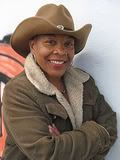
This is Sage. This character began for me simply from running across this picture on the Internet. Slowly, who she was unfolded into what was supposed to be a secondary character in a YA story, now is destined to have a paranormal adventure romance of her own. She's a mother, a lesbian, an artist, and a craftswoman. She's been hurt, but is strong and does what she has to do for her family and for the people that depend on her. For many people she is the rock of the community. You see, all this and more just from a picture.

Characters touch people, shared experiences, familiar ideas for backgrounds, admiration and often times sympathy, these are the things that draw the reader into the story, then grab the imagination into the reader has no choice but to finish the story, they just have to know what happens this character they care about. I'm not missing everybody writes with this much energy into creating characters like these, but this is why I do it.

10 August 2011

13 Links about Characters and Characterization

This month at Beyond the Veil we've been posting about characters. Here's a quick round-up:

1) We started out with Xakara talking about Character Crushes (http://paranormalauthors.blogspot.com/2011/08/characters-welcome-and-readers-too.html)  and she kindly included photos of Michael Shanks, Vin Diesel and Nathan Fillion.

2) Then from A. Catherine Noon, we had an analysis of characters from several science fiction franchises (http://paranormalauthors.blogspot.com/2011/08/characters-i-love.html).

3) Sela Carsen ackled mythological characters (http://paranormalauthors.blogspot.com/2011/08/characters-from-mythology.html)  and archetypes, encouraging us to look around as less common mythologies for story research.

4) Characters who cause conflicting emotions (http://paranormalauthors.blogspot.com/2011/08/characters-you-love-to-hateor-hate-to.html)  were the topic of Carolan Ivey's post--a prime example being Severus Snape from the Harry Potter series.

5) Amy/AC Ruttan talked to us a little bit about a favorite historical character, Boudicca (http://paranormalauthors.blogspot.com/2011/08/most-memorable.html),  the spelling of which I had to check several times because nothing looked right.

6) Bianca D'Arc talked about how she is turning HERSELF into a steampunk character (http://paranormalauthors.blogspot.com/2011/08/convention-time-again.html)  for a conference.

7) I am going to continue the listmania I've already started by sharing some links to writerly articles about characterization or characters. First, from my own blog, here is the first entry that came up when I typed in characterization that wasn't one of Meankitty's interviews: http://blog.jodywallace.com/2011/06/whats-up-with-larry.html  This short article is an examination of the character of "Larry" from the Young MC song "Bust A Move". Yes, characterization can occur in works of fiction as short as songs and poems! Let's just say it's succinct characterization (as long as you're not J. Alfred Prufrock).

8) Here's some tips about making character's lovable: http://www.netplaces.com/writing-a-romance-novel/the-nuts-and-bolts-of-characterization/making-characters-lovable.htm

9) Here is a list of deaf characters in romantic fiction: http://www.myshelf.com/deaf/romance.htm  which is more than a little awesome.

10) Author Gabi Stevens talks about writing romance novel protagonists: http://gabistevens.blogspot.com/2009/09/how-to-write-romance-novel-characters.html

11) A slightly older essay from Jennie Crusie about learning tricks from television to use in your romance fiction, including for characterization: http://www.jennycrusie.com/for-writers/essays/the-five-things-ive-learned-about-writing-romance-from-tv/

12) For some snarkier fun (yes, snarkier than Crusie!), here's a look at historical male character (stereotypes) from a website called Literary Dilettantes: http://literarydilettantes.com/2011/03/15/deconstructing-the-romance-novel-characters-edition-part-2/

13) Last but not least -- because (nearly) every character needs a name, here's some character naming tips from Anne Marble with a special section for speculative romance authors: http://www.writing-world.com/romance/names.shtml

It's in character for me to do a Thursday Thirteen at the last minute but I'm actually posting this on Wednesday night! That's slightly OOC (editorial shorthand for out of character) for me but I put not one but 3 reminders on my computer this week so I wouldn’t forget.

Happy reading!

Jody Wallace
So much cyberspace, so little time!
www.jodywallace.com  / www.meankitty.com

13 May 2009

Killing off Mom

Mother’s Day was this past Sunday - Happy (belated) Mothers Day, to all the moms!

Instead of writing this morning, I started to think about mothers in the books I write. I was chagrined to realize there aren’t any.

In Hunting the Huntress, my first release, the heroine’s mother was not in the book. In my next release, Flawed, coming out June 30th (shameless plug) the mother is dead, and the father has remarried to a pretty horrible woman.

In the Christmas novella I just finished, the heroine is an orphan. Sorry Dad, looks like you got to die this time too. She spent several years in the foster care system, so may have had some decent mother figures, but if she did they didn’t make it onto the page.

My current work in progress? You probably saw this coming – the mother is dead. She died before the first page, and rather painfully. It may have made her death a bit easier to know her daughter tried desperately to save her life.

Even in the first book I ever finished, the wretched space opera I’ve since re-titled Cliche on Planet Nine, the mother was dead.

So what does this all say about me, and my mother? Nothing at all, I hope! My mother is a remarkable woman, who I love very much. I think we have a pretty normal mother-daughter relationship. She has supported me in pretty much everything I’ve ever done. I can’t remember that she has even once tried to tell me to play it safe, even though I know some of my ideas and efforts must have made her clench her teeth as she looked the other way.

And she always, always encouraged me to go for my dreams. Her quiet support gave me the confidence I needed to take chances and try things even when the odds were long for success. Things like writing.

So why have I killed off all the mothers in my books? It wasn’t ever a conscious decision. In three years of writing I never thought about it until this morning. As a writer I look for ways to give my characters hard times to learn from, tragedy to overcome, situations that force them to question everything they know and come out a better, stronger person. I guess maybe it speaks to some dark, hidden corner of my mind that I think losing a mother would be one of the hardest losses to face, and not one I want to even think about in my own real life journey.

So to all the moms I have killed of in writing, I am sorry. I’ll have to find a new source of pain to inflict on my heroines, since I sure don’t want to become predictable. And the next mother I write? I’ll try to make sure she is every bit as wonderful , loving, and alive as my own.

02 May 2009

Getting Into Character

I tend to read many different types of books and watch a wide variety of movies and TV shows. No matter the genre, the books, movies, and TV shows that I absolutely love have something in common: off-the-wall characters.

To take examples from the TV world: the sassy quips of Buffy, the Vampire Slayer, the gruff charm of Gregory House, the over-the-top-obsessive yet brilliant Adrian Monk, scientific and quirky Gil Grissom (CSI); there is something special about all of them, something unlike all the thousands of other characters out there. Unique. Just like flesh and blood human beings are unique.

How does a writer get into a character? Well, every writer has a different technique; some do character journals, some fill out long, involved forms or checklists, and some simply write the story and allow the character to flesh out along with the plot. The technique isn’t important. In my opinion, the important thing is that the writer crosses a line, the line where the character becomes real to the writer.

Notice that I didn’t say the writer should believe the character is real—that way lies insanity. No, what I’m talking about is the writer’s ability to see the character in their head as a fully-formed person. Let’s invent a character to illustrate. How about the heroine’s father? Male, middle aged, businessman, about 6 feet tall. That may be enough for a walk-on character the reader sees for one scene. But let’s say he’s going to play a bigger part in the story. Now what? Is he warm or cold in his relationship to his daughter? Did he spend time with her as a child? Now? Is he still protective of his, now grown up, little girl. How does he feel about his wife? Still married? Let’s say he plays a round of golf during the story, and one hole proves to be quite problematic. You could write the scene very straightforward, or you could let a huge portion of personality come out. Maybe like this:


You can’t make that stuff up. Well, yes you can, but you have to think outside the box — pretty far outside the box.

The next time you encounter an amazing character in a book or movie, you know the writer reached deep into the deep dark recesses of — reality.

16 July 2008

Mac N Cheese for Writers

Saw a blog recently about Reality TV and writers, the thesis of which was that reality TV has a lot in common with romance novels because it tends to have assorted "ordinary" characters, a hook and an HEA (and HEA for somebody, albeit not necessarily somebody deserving). The original blog entry was more detailed than that, but I couldn't help thinking about it when I chanced upon a program on FoodTV last night about 5 chefs competing to make the best mac n cheese. In all honesty, I didn't WANT to be up near midnight with thoughts of mac n cheese in my head, but I was hoping the program would bore the baby to sleep and I could either write or sleep myself. Instead, I got sucked into the drama and characterization and remained intent on the screen even after the baby konked out.

The 5 chefs were:

1) Young chick with v. short dark hair who loved local food and organics. She wore a barrette in her hair and seemed confident in her ability to win. In the confessionals chosen for viewing, she criticized the judges more than once.

2) Slightly older chick with v. short dark hair who seemed gloomy. Luckily for viewers, she did not wear a barrette to avoid confusion with #1, but she also seemed confident she would win. She was not always pleased with the judges and questioned the choices of other contestants.

3) Young man with a buzz cut and piercings who seemed enthusiastic and frazzled by the whole process. He did not act as if it was his right to win, though he did have a few stinging things to say about the judges.

4) Older dude who didn't have much personality but apparently owned a restaurant. He seemed very efficient. He made the least impression on me but won the competition.

5) Older lady who was full of good cheer and seemed to be having a fantastic experience -- she was a self identified Southern cook and used lots of collard greens. I wanted to go to her house for dinner.

You can tell which chef was my favorite, which one I was rooting for. #5. Why? Because she didn't criticize the other contestants, because she seemed to be having a good time, and because she lacked pretention. At least--in the confessionals we were shown.

As a writer, I found it interesting to observe how these confessionals were used to create character. I'm sure there was countless footage that wasn't used. With hours of stuff to pick through, the creators had to choose which comments to share, what character traits to emphasize, what scenes to give airtime, and so on, taking into account the format of the show and the need to display certain elements like the judging process. The time was divided amongst the participants, too--yet another restriction on what footage could and couldn't be used.

The creators leaned towards action and reaction scenes to build interest and plot. They liked sound bytes where the character in question was being angry, passionate or funny. There wasn't a lot of "Gosh I like cheese, let me tell you about my love for cheese" type stuff. They only showed action, such as chopping, stirring or tasting, if there was additional action or reaction to go along with it, like a character voice-over saying how he or she was frantic at that point or a judge staring at the chopper while voice-overing that so and so was painful to watch.

In the end, I came away from the show with a relatively clear idea in my own head what these characters' personalities were, for the most part, even though I started watching about 15 minutes into the program, missing what I'm sure were the introductions.

How as writers can we hone in on just the right scenes and snippets to display character in our novels?

1) Remember that viewers want to see action.

2) They also want to see reaction.

3) Include crucial plot scenes (like judging) and write them in a way that makes them feel important (add voice overs, quick scene cuts, tension, background music, facial expressions, etc.)
4) Make sure all scenes work doubly hard, with voice overs (deep third POV, perhaps?), chronological tension and layers.

5) Be aware of the characters' more prominent personality traits and focus on those. In a novel characters might grow and have arcs, but in the hour tv show, the creators were careful to select confessionals that portrayed the chefs consistently. My favorite, #5, was cheery in all her scenes, even when she was in round 2 and making her gourmet mac n cheese with all the little fiddlly bits and sauces. The less likeable contestants were consistently gloomy or snarky or competitive in their confessionals.

Characterization can make or break a novel...or a TV show. And that's my important sounding pontification for the day.

Jody Wallace
http://www.jodywallace.com
SURVIVAL OF THE FAIREST--Available now, Samhain Publishing

18 June 2008

An Interview with a Princess

Today I'd like to introduce you to the heroine of my upcoming novel, SURVIVAL OF THE FAIREST, due July 15, 2008, from Samhain Publishing. It's a paranormal romance with comic overtones, often due to the antics of the heroine, Princess Talista of the Fairy Clan Serendipity, as she experiences all the delights the human world has to offer...including the delightful hero, Jake Story, a stage magician who has a high tolerance for unique people.

Luckily for Tali.

In Tali's Realm, fairies became dependent upon their magic to handle day to day tasks, and when magic disappeared from the Realm for a period of time, there was much hardship, chaos and starvation. Now, fairies are sent to remote areas of humanspace -- our current world -- to learn to get by without magic. They master the basics of building fires, cooking food, setting up camp, digging latrines, avoiding humans, and so on and so forth.

Tali has absolutely no desire to live in a tent and boil water for drinking, so as soon as her survival training teammates turn their backs, she uses some contraband magic to transport herself to Vegas, where the adventure of her lifetime commences.

Me: Tali, what motivated you break the long-standing rules of your people and hightail it off on your own?

Tali: I didn't make those rules, the Fairy Court did. They're over-protective, secretive, ancient geezers who ignore the fact that our salvation -- you know, if magic disappeared in the Realm again -- would be mingling with humans, not sleeping on the ground and eating nuts and berries in some spirit-forsaken wilderness. I'm so sure the Court wouldn't buy some mansion somewhere, to rest their old fey bones on fancy human beds and drive big cars and eat hamburgers.

Me: In other words, because you disagreed with the rules, that means you weren't under any obligation to obey them? What makes you so special?

Tali: I'm a twosies. Come on, human. You created my world. You know that. All fairies are multiple births but twins are the strongest magically, blah blah blah, my sister and I will be part of the Court some day, blah blah, so yeah, I'm special...whether I want to be or not. I was really looking forward to being normal for two weeks. A normal human tourist in Vegas, baby!

Me: But still. Your little side trip risked your safety and your sister's wellbeing, because if you got killed, considering the psychic connection twin fairies have, she might die, too. Not to mention you endangered the whole fairy Realm when it came right down to it. Some readers might say you were a bit TSTL.

Tali: What is this TSTL? That's not a human word I recognize.

Me: You must have skipped that class.

Tali: Human Studies was the one class I didn't skip. I learned a lot more eavesdropping on the Court than I did in History of Magic. You're making stuff up again, aren't you?

Me: It's kind of my job.

Tali: Seriously, what's TSTL?

Me: It's an acronym that stands for--

Tali: Right, acronym! T...S...T...L. The Sexiest Tali Alive!

Me: No, it stands for--

Tali: Terrific Story They'll Love.

Me: Uh, no. Although they will. It's Too S--

Tali: Too Sexy To... Laugh. No, I laugh all the time. Love. No, I'm quite loveable. Just ask Jake. He's too sexy. Spirit! Did I tell you about the time he--

Me: It's in the book, but it's too late in the plot to reveal. That's considered a spoiler.

Tali: You told them that? Can't a fairy have any privacy?

Me: You were about to tell me in a public interview.

Tali: This is public? Hi, you guys! I love humans! (blows kisses) We should do lunch. I'll be having the chocolate.

Me: Can we get back to the interview? Like I was saying, your behavior wasn't what one expects from a mature romance novel heroine. You might be eighty in fairy years, but in human years one might say you acted like a headstrong teenager.

Tali: I'm mature enough to know not everyone has to act, look, dress and think exactly the same as everyone else. I like excitement, intrigue and researching human technological advancements. My version of survival training was for the future as much as it was for myself. It's not like I had magic past that initial transport spell. I used my surroundings to get by as best as I could, and that's what my training was all about. Survival. Do you really think fairies would be better off in some forest if they lost their magic? Heck to the no!

Me: That sounds good on paper.

Tali: Which is a good thing, because eventually it'll be on paper.

Me: I know researching humans as a future Court member was a small part of your motivation, but--

Tali: Small? It was most of it. Some of it. Enough of it.

Me: Yeah, I'm not convinced. Readers still might label you TSTL because of the way you--

Tali: I've got it. Too Sexy To Languish!

Me: It stands for Too Stupid to Live.

Tali: I am not!

Me: It could have gone south.

Tali: To Mexico? I'd like to go to Mexico.

Me: No, that means it could have gone very badly indeed. It didn't work out quite the way you expected, did it?

Tali: Surprises are the spice of life. They taste like chocolate.

Me: Taking off on your own, in a foreign country--

Tali: I spoke the language, I studied the culture, I had an escape tooth, and I had a lot of money.

Me: Gold coins?

Tali: Like anyone would have thought that paper stuff would be more desirable than gold.

Me: I think you learned that lesson.

Tali: Oh, shut up. And anyway, it was worth it. I met Jake. Ah, Jake. Total hottie. And smart! When the Fairy Court tracked me down, he--

Me: That's a spoiler too. In fact, I think they've had enough for today. Shall we sign off?

Tali: Hey, next time, interview Jake. I'm busy. I've got a Chip and Dale ballet to watch, and he said no way was he going.

****

Thanks for stopping by! You can read an excerpt of Tali and Jake's first meet if you sign up for my newsletter and read the 3rd edition, which I recently released: http://groups.yahoo.com/group/jodywallace/ It only comes out once every two months, so don't worry you'll be bombarded by promos and solicitations.

My website can be found at http://www.jodywallace.com and my books at http://samhainpublishing.com/authors/jody-wallace

SURVIVAL OF THE FAIREST--Coming 7/15 from Samhain Publishing
A SPELL FOR SUSANNAH--Available now from Samhain Publishing